{{{ title }}}
{{# subtitle }}{{{ subtitle }}}
{{/ subtitle }}
{{{ markup }}}
{{/ Thumbnail }}
{{# Mood }}
{{{ markup }}}
{{/ Mood }}
Under the heading ‘SPIEL-RÄUME’, ‘Musik der Jahrhunderte’ brings together all its activities and projects in the fields of music outreach, cultural education, participation, public relations and audience development.
SPIEL-RÄUME are places for experiencing art, for listening and discussing, for creativity, experimentation and discovery. Whether in a concert hall or a youth community centre, with vocational college students, in collaboration with ecological initiatives, the Stuttgart club scene, or when developing programmes for young people from a wide variety of backgrounds–SPIEL-RÄUME invite participants to discover and contribute their own perspectives and experiences through artistic processes. Contemporary musical creation serves as both a medium and a stimulus, for new music is, by its very nature, geared towards change, challenges certainties and seeks out the unknown.
Music is often associated with identity, emotions and direct access to the soul. New music may occasionally seem enigmatic, but it also holds immeasurable potential: the unconditional opening up of creative needs within every person, enabling them to find individual expression through sounds, structures and creative forms, to engage with their surroundings, to perceive them anew, and to experience themselves as an active part of a community.
SPIEL-RÄUME shift the way we think: they are not just meant as an invitation to engage with or participate in ‘high art’, but as open processes of encounter in which people from a wide variety of walks of life get to know one another, listen to one another, share perspectives and, using artistic means, develop shared spaces for creative activity that enable them to exercise their creative power and empower themselves.
For SPIEL-RÄUME, Musik der Jahrhunderte collaborates with practitioners from a wide variety of social contexts. To initiate points of contact and develop needs-based, target-group-specific programmes, MDJ specifically involves experts from various fields. These experts contribute their perspectives, act as catalysts and, in turn, incorporate the experiences gained and tried-and-tested methods into their own structures, fields of work and everyday realities.
Collaboration with multipliers plays a key role in this: they act as translators between the audience and artistic practice, forge connections and help to facilitate encounters and exchange.
SPIEL-RÄUME are experimental laboratories–for the audience as well as for the artists themselves. They offer the opportunity to step outside one’s comfort zone, to question one’s own practice through dialogue with others, and to realign it. This creates scope for creativity and action, within which contemporary music can be experienced, explored and further developed collectively. The insights and impressions gained in this way feed directly into the further development of artistic processes, such as inclusive outreach and concert formats.
Particularly in an educational context, there is a great interest in enabling children and young people from diverse backgrounds to engage with music.
In this seminar, students from various disciplines explore how contemporary music can be made accessible to different target groups and what opportunities it offers, as an artistic medium, for experiencing self-efficacy and finding one’s own means of expression. Through dialogue with artists, they develop target-group-specific and needs-based formats that can be applied in both school and informal settings.
In the summer semester 2026, the composition »Klangraumschiff (Sound-spaceship)«, developed by composer Valentin Schaff, provides the artistic foundation for the seminar. The interactive sound-space installation was originally conceived for the voices of the Neue Vocalsolisten Stuttgart and invites participants to explore a journey to various »sounding planets«. On a room-sized square floor, they move freely through the Klangraumschiff. Depending on the positions they adopt or which additional elements they unlock by playing percussion instruments, the singers at the edge of the performance area react and alter the resulting soundscape. Through their movements and decisions, the participants thus directly influence the musical unfolding. Recorded music and sound effects, lighting effects and projections complement the immersive space-sound experience.
Students from the cultural and media education, special educational needs and teaching music worked in multi-professional teams to develop their own interpretations and concepts for the Klangraumschiff: this process gave rise to new ideas for the installation’s realisation, whilst also allowing individual elements of the composition, musical parameters or the instrumentation to be altered.
They were supported in this by the composer Valentin Schaff, the singers of the Neue Vocalsolisten, and experts from fields including music education and technology. The formats developed were ultimately tested, performed and evaluated with pupils from the August-Hermann-Werner-Schule in Markgröningen and two satellite classes at the Friedrich-Keller-Grundschule in Neckarweihingen.
Two days of performances enabled those involved to refine the implementation of their concepts between run-throughs, drawing on the impressions and observations they had gathered.
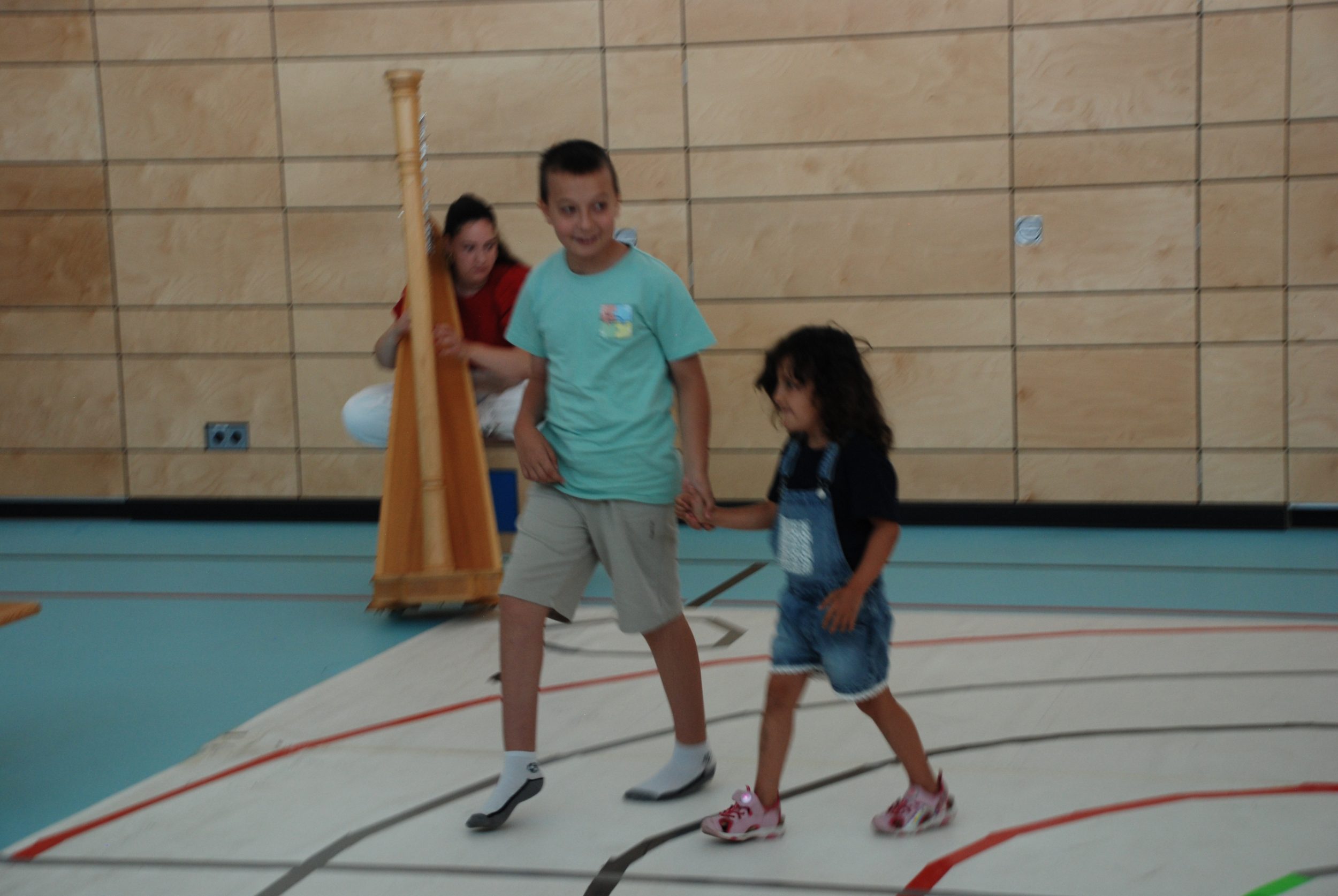
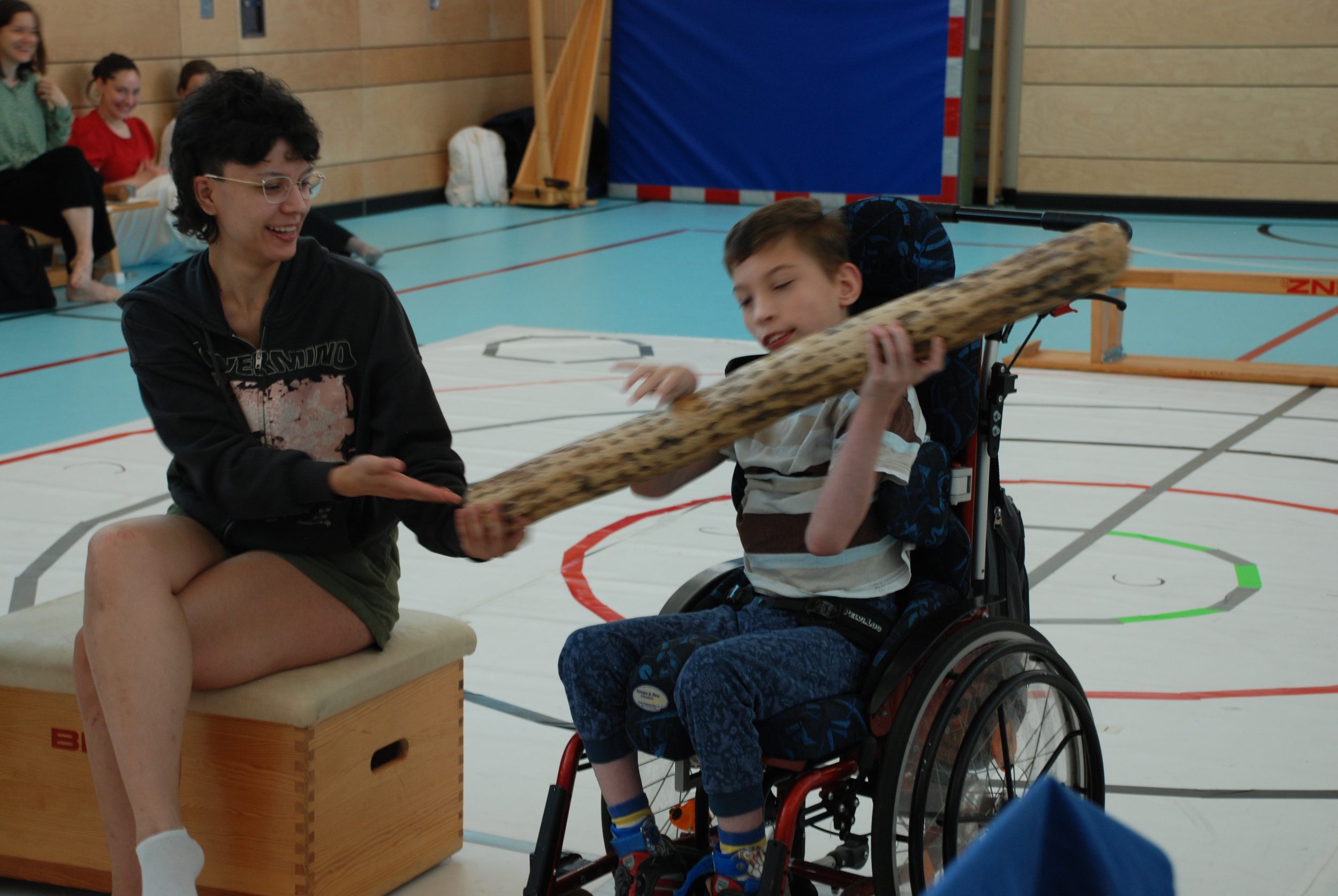
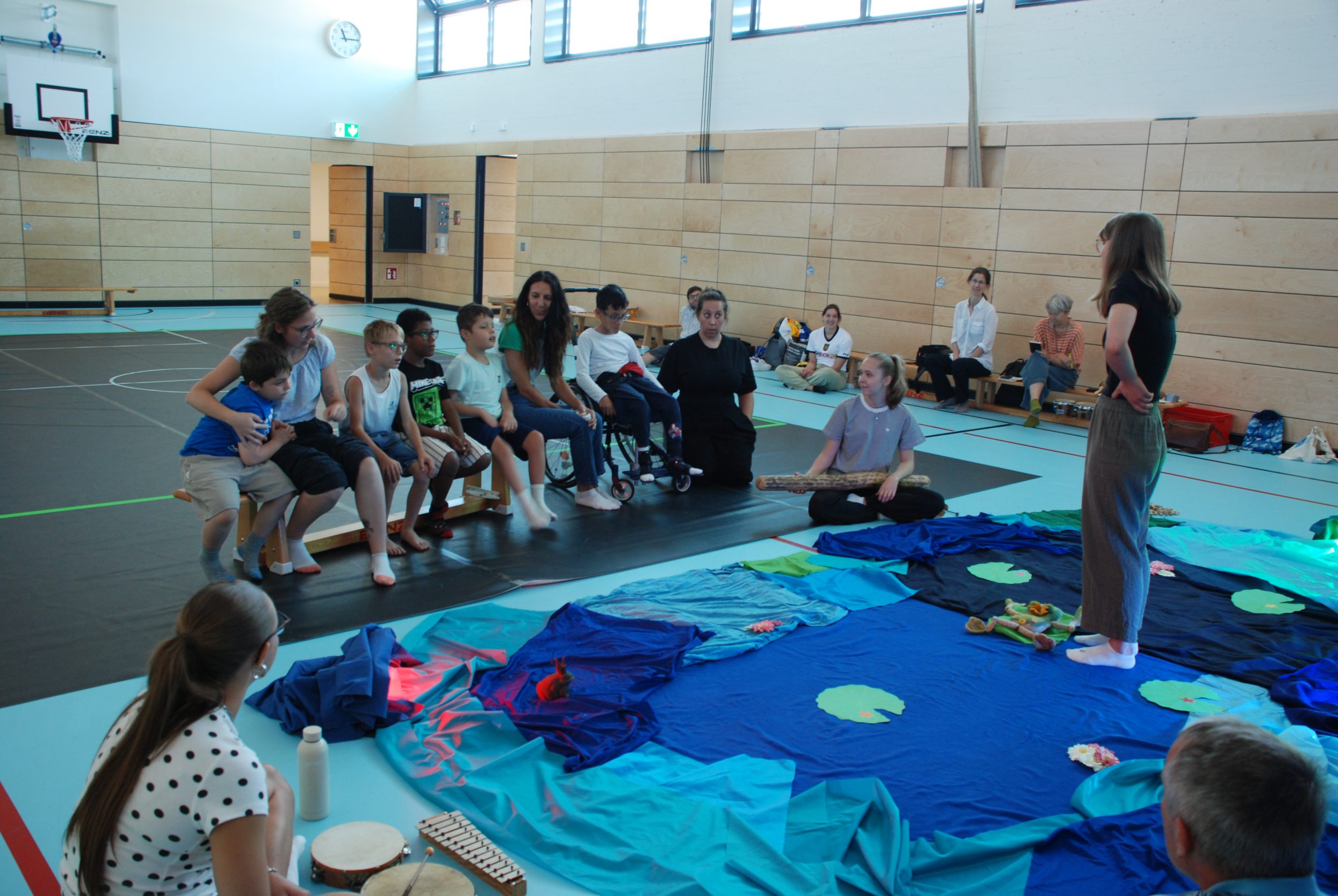
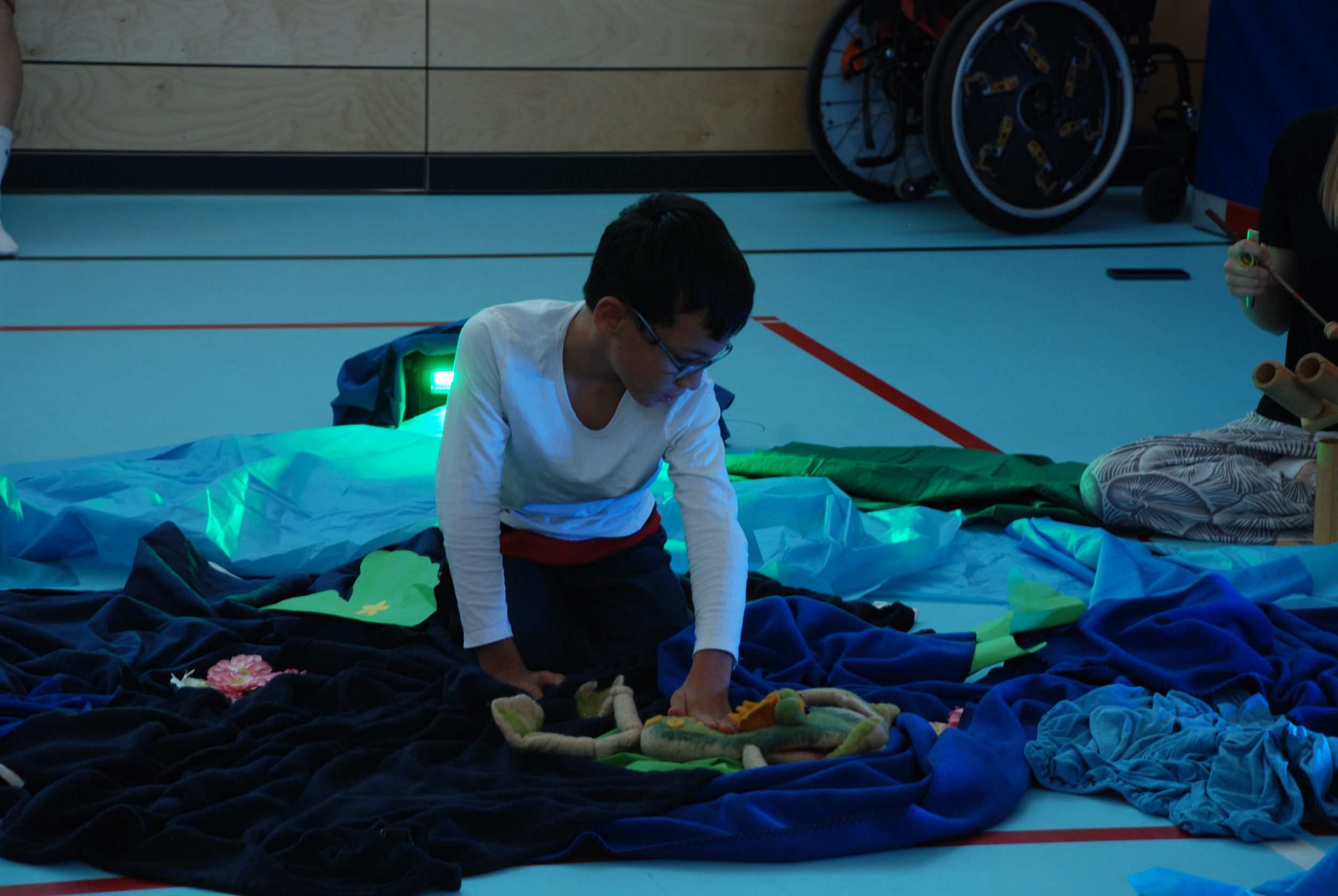
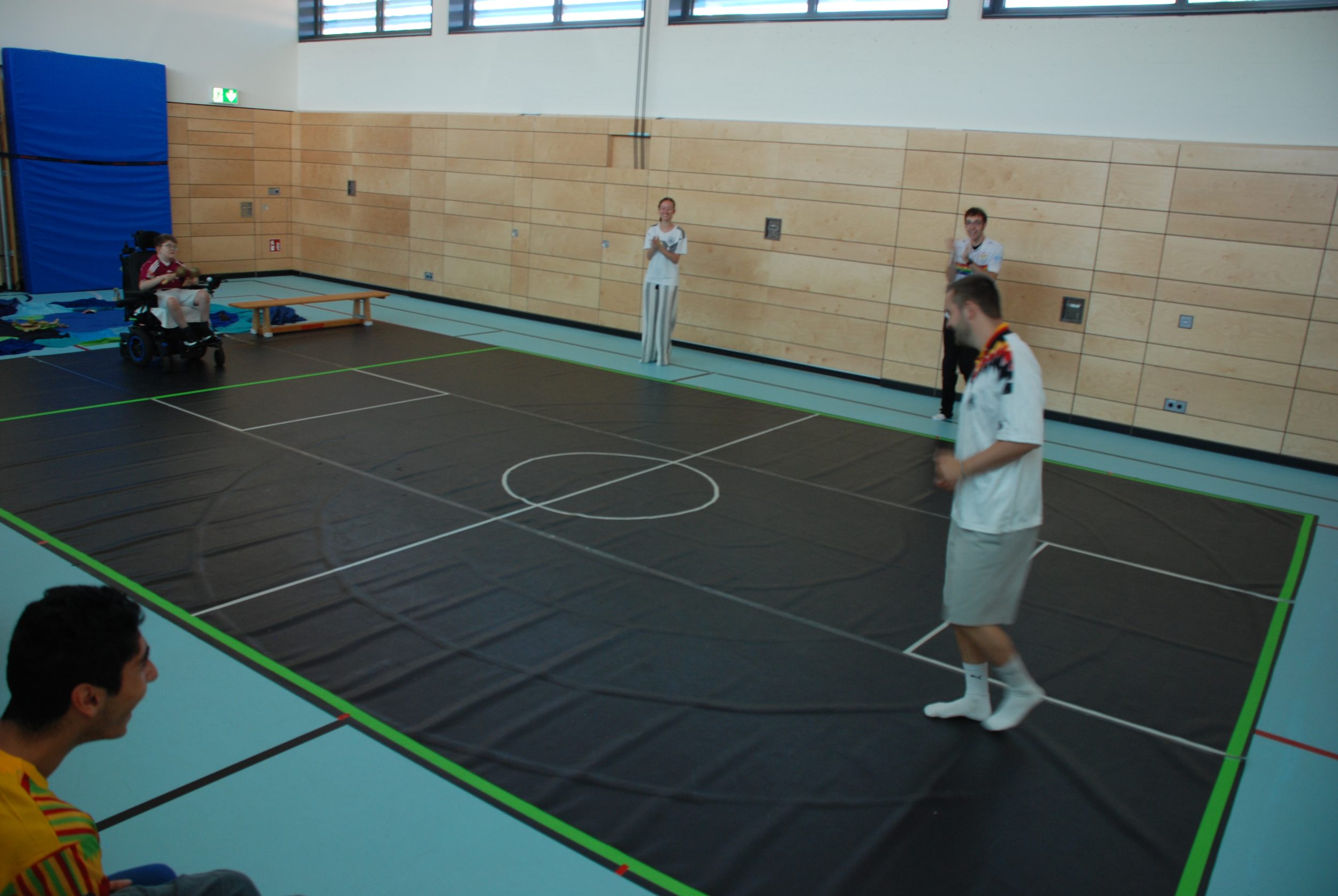
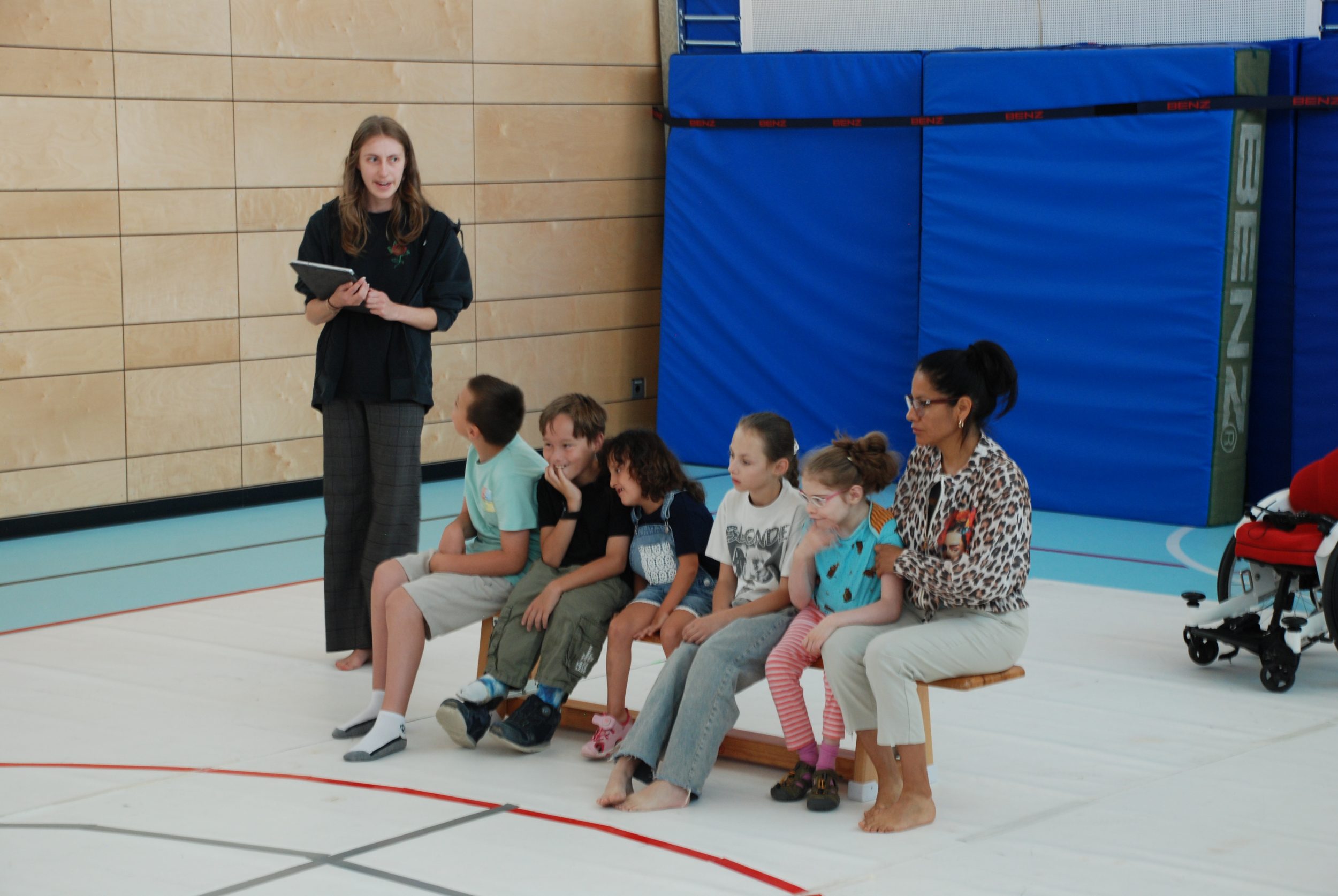
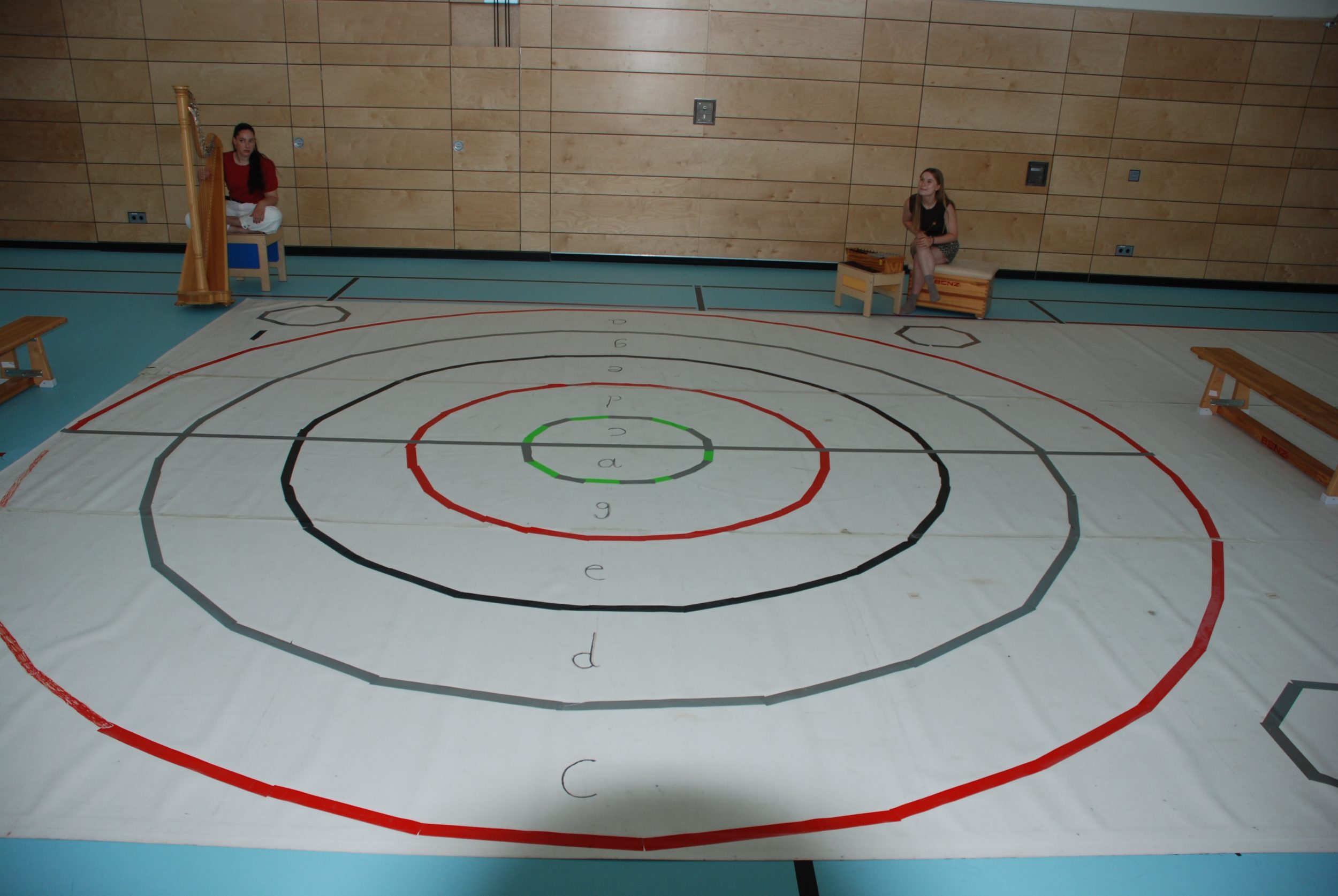
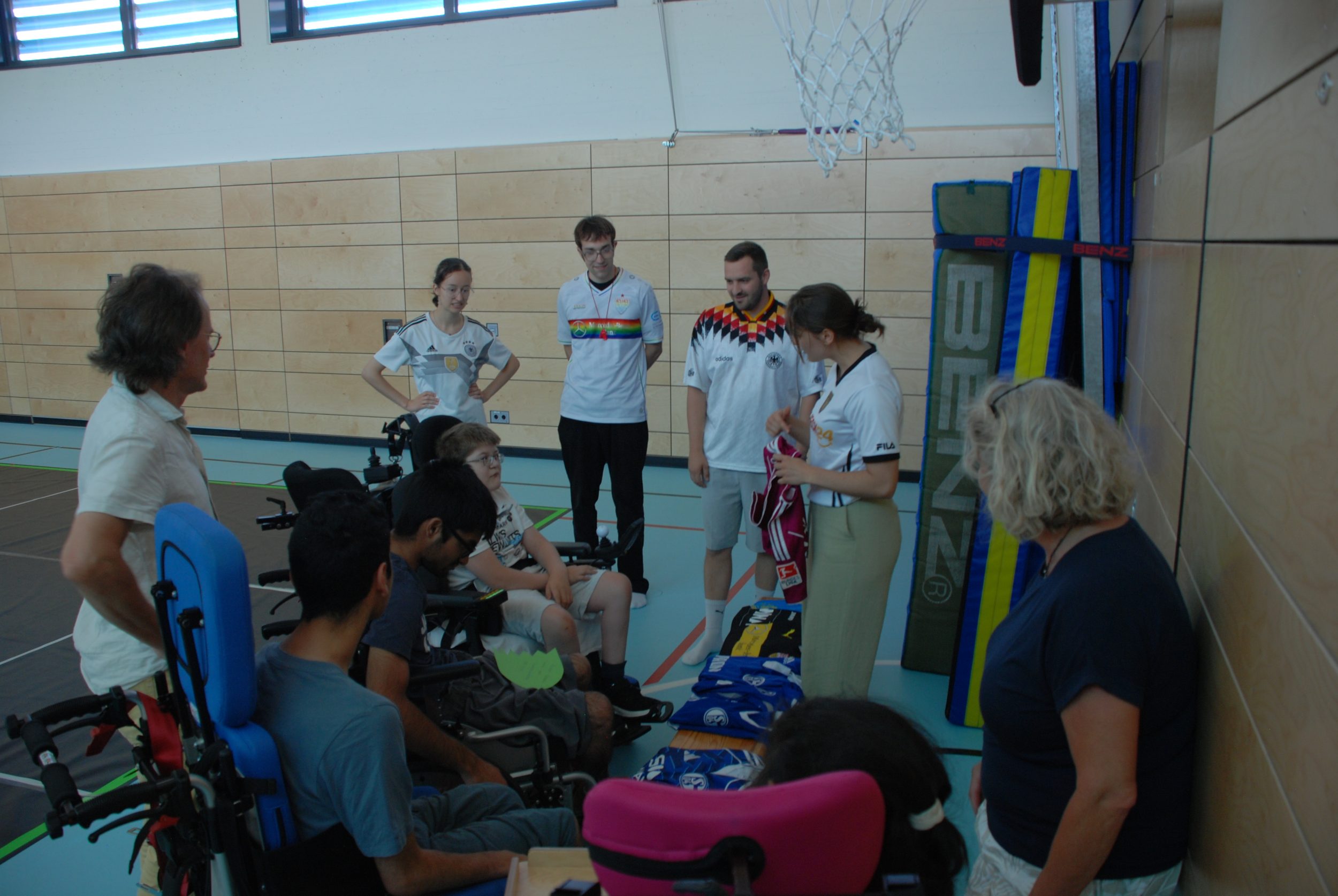
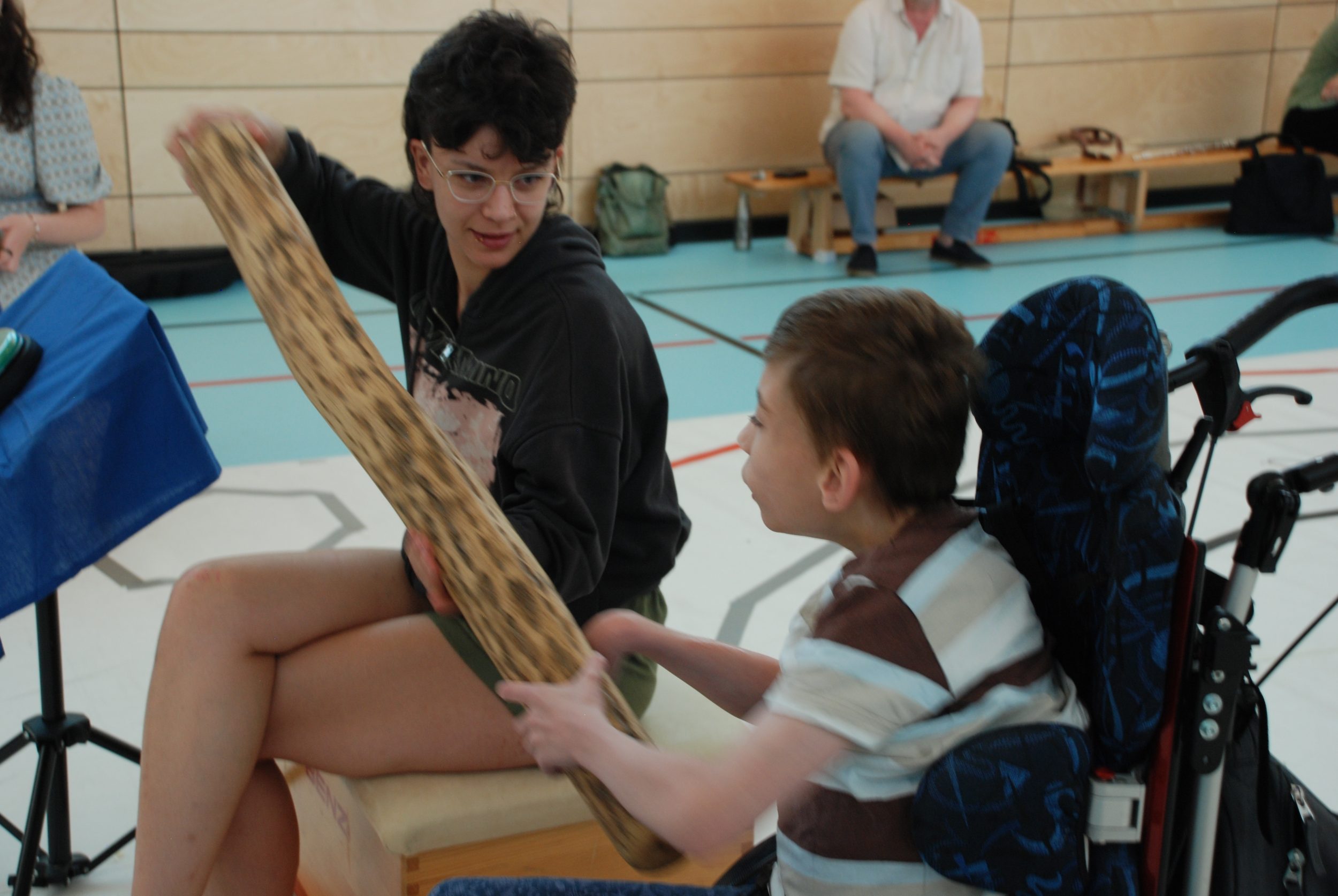
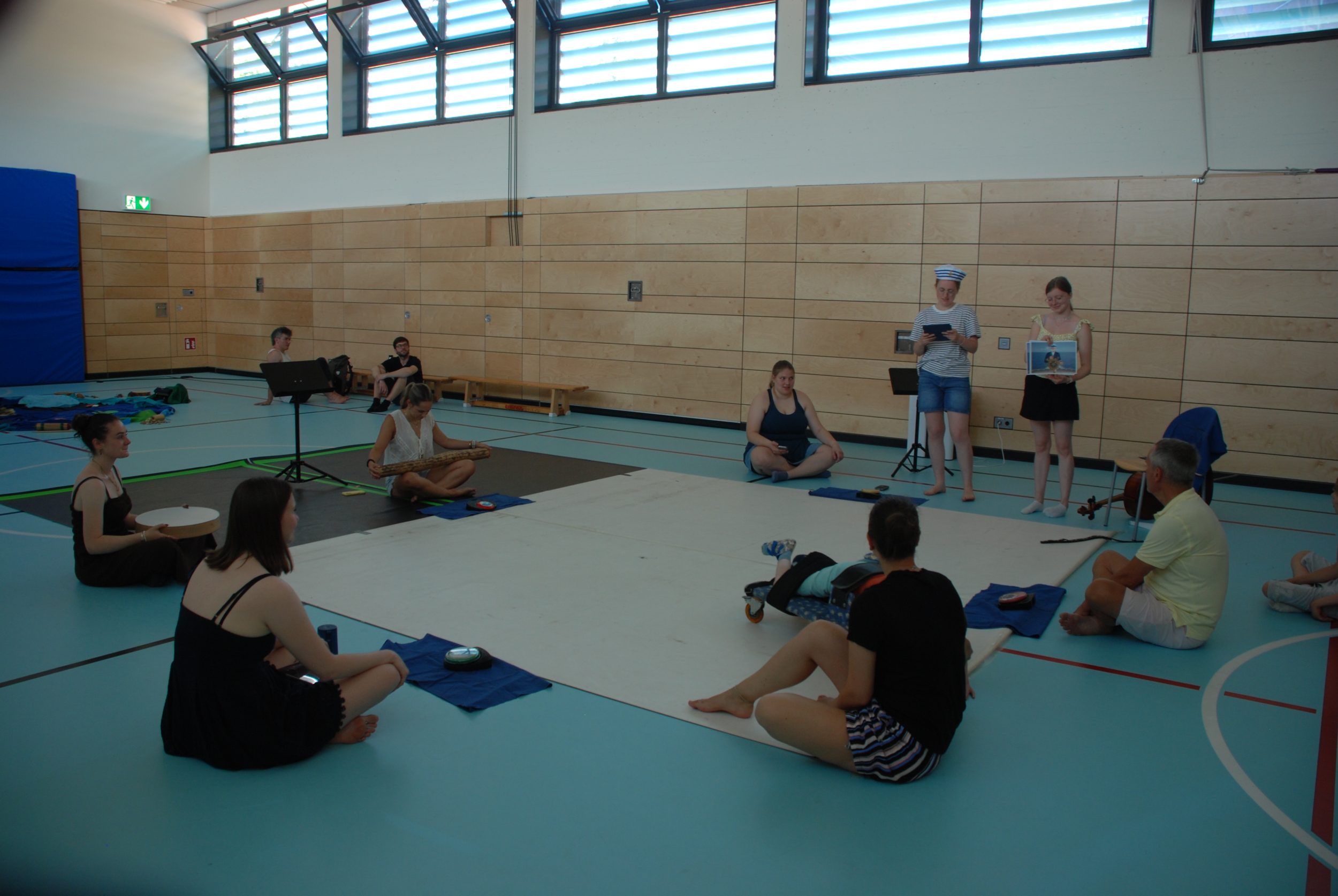
SPIEL I RAUM I KLANG–Encounters in Contemporary Music is a collaborative project between Musik der Jahrhunderte, the Department of Special Education, the Department of Music and the Department of Cultural and Media Education at Ludwigsburg University of Education, and is funded by the Lechler Foundation.


Exploring the question of what forms of expression can be discovered through engagement with contemporary music, and how one’s own creative abilities can flourish in the process, visitors to the Community Psychiatric Centre in east Stuttgart meet weekly for workshops with the musician and animator Monika Nuber.
In these sessions, they work with, amongst other things, sound materials from their everyday lives or their surroundings; they use these to develop their own set of instruments, carry out sound experiments, improvise and work out basic compositional structures, which can later give rise to musical miniatures, stories or even entire pieces.
SPIEL-RAUM also describes PLAY in SPACE: Together, the group explores how spaces sound, how music can transform spaces, and what possibilities arise for making spaces resonate according to their own ideas. In this way, familiar and unfamiliar situations, places and perceptions can be viewed anew and even reinterpreted through artistic means.
From time to time, composers or professional musicians also join the group, offering insights into their work and contributing their artistic perspectives. Joint visits to cultural events and various cultural venues in Stuttgart are also part of the programme.
Whether the project results in a public presentation will emerge from the group’s collaborative work. One hope, however, is that the artistic realisation will create opportunities for encounters and exchange within the district and in the neighbourhood surrounding the GPZ.
Winfried Böhler Kultur Stiftung Composition Competition
Contemporary music for amateur or semi-professional orchestras, ensembles and soloists
Since 2008, the Winfried Böhler Cultural Foundation has been helping to build up an attractive, artistically high-quality repertoire of contemporary music that can be performed by children, young people and adult amateur musicians.
To this end, the Foundation organises the ‘ad libitum’ composition competition every two years. The organisation of the competition was taken over by Musik der Jahrhunderte in 2026/27.


For the 10th edition, ad libitum is collaborating with the Heilbronn Municipal Music School and its ensembles.
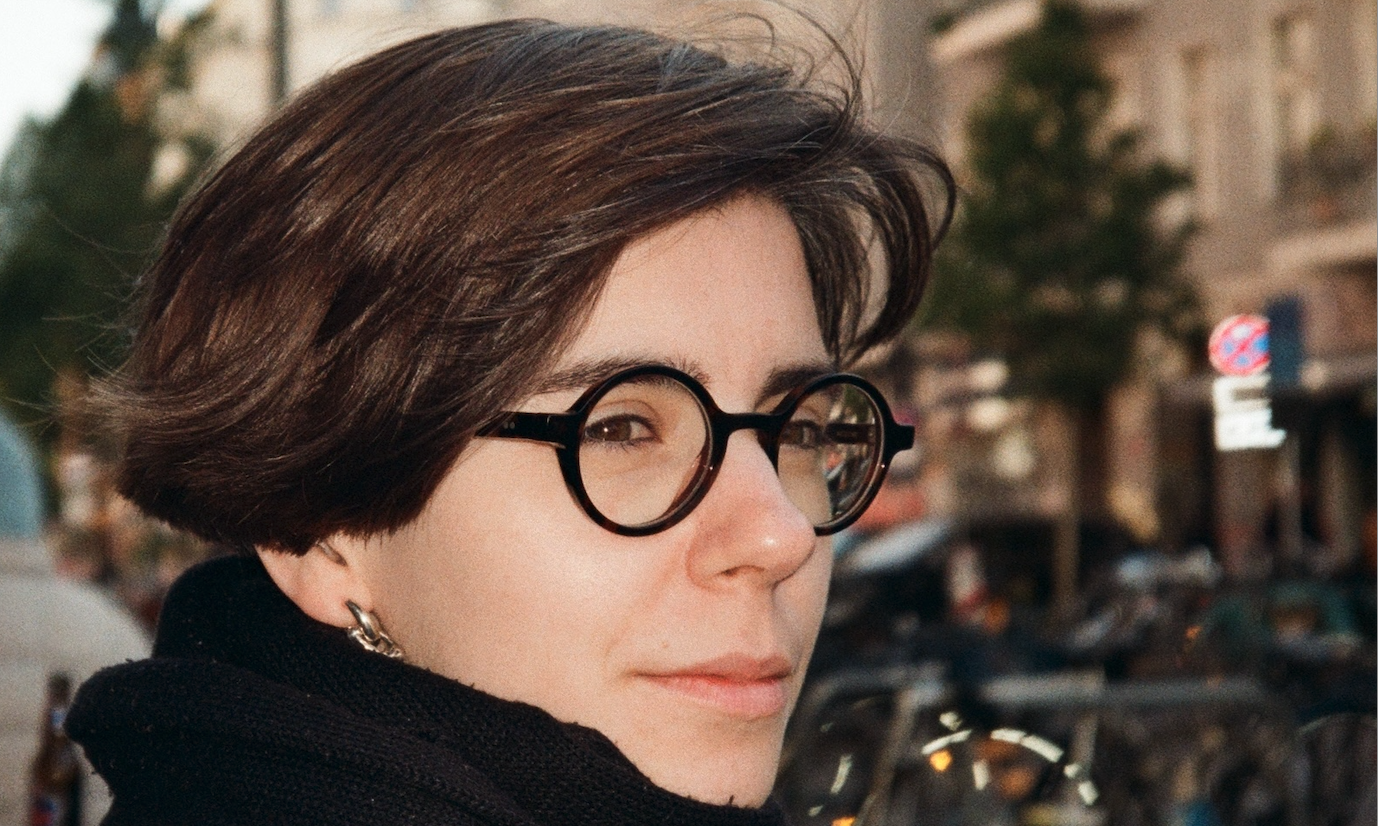
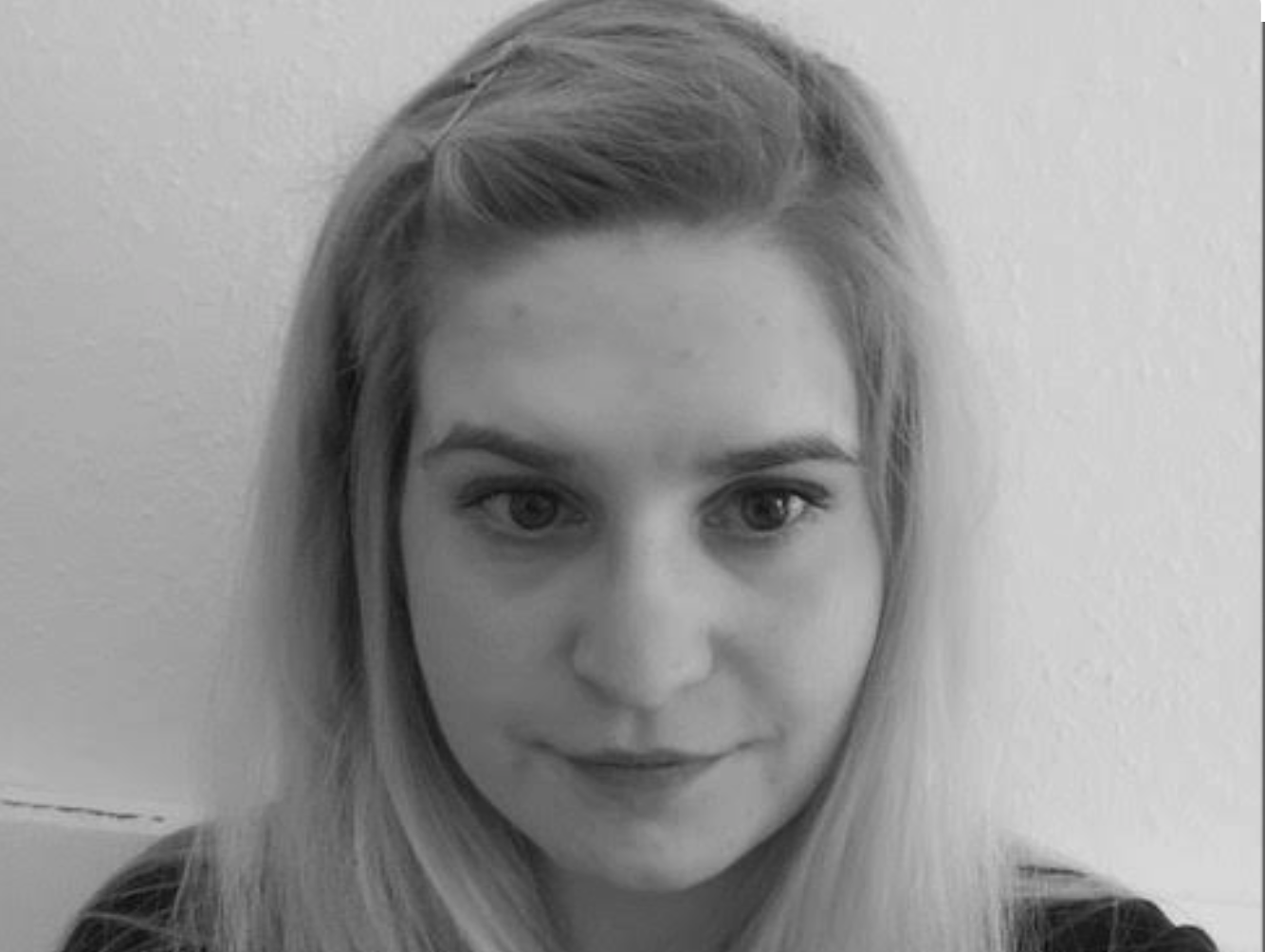
As the professional partner ensemble, trio marcel (Malin Grass, violin; Benjamin Kautter, cello; Alexander Waite, piano) is providing artistic and organisational support.
The 2026 expert jury comprised the composers Meike Senker and Ulrich Kreppein, as well as one representative each from the accompanying ensemble and the music school, and awarded a total of eight composition commissions.
The compositions will be premiered at the prize-winners’ concert on 17 April 2027 in Heilbronn.
The collaboration with the Heilbronn Music School and the 2027 prize-winners’ concert form part of the programme surrounding Heilbronn’s status as European Green Capital 2027. The City of Heilbronn and the Heilbronn Music School are thus positioning themselves as key drivers of sustainability in musical and cultural education. The aim is to encourage young people to engage critically with issues concerning the future, environmental awareness and social responsibility through the arts, and in particular through contemporary music.

Trailer–ad libitum 2024/25
Mit Schüler*innen der Musikschule Waldkirch
Ad libitum expressly encourages experimentation with concepts that serve to broaden the range of performance techniques whilst also having a social impact. This is because the core idea behind ad libitum is to create contemporary art music that can be performed by amateurs, which takes a stand, broadens horizons and stimulates discussion about shared musical experiences.
| {{{ content }}} |
|---|
| {{{ content }}} |
| {{{ content }}} |
| {{{ strings.konzerte }}} | {{{ strings.unterstuetzer }}} | {{{ strings.regulaer }}} | {{{ strings.ermaessigt }}} |
|---|---|---|---|
| 35€ | 25€ | 14€ | |
| 28€ | 18€ | 10€ |
| {{{ strings.festivalpass }}} {{{ strings.beinhaltet_alle_konzerte_ausser }}} |
{{{ strings.unterstuetzer }}} | {{{ strings.regulaer }}} | {{{ strings.ermaessigt }}}* |
|---|---|---|---|
| 298€ | 208€ | 110€* |